Turning a Novel into a Memoir into a Novel-as-Memoir
Many years ago, I wrote a novel–my first novel–and it was pretty good. Good enough to be a finalist in three national contests, and I was pretty sure it was going to get published, or that it would land me an agent. Until it didn’t.
As it turns out, that first book, called The Ruins, was my “your first novel never gets published” novel. You know, the one everyone tells you about. The one that you think is going to launch your career but ends up in a (literal or metaphorical) drawer. Considering my advanced age at the time (I was in my late thirties), I thought my first novel would be better than all those other first novels. But it wasn’t. So I reluctantly did what I had always been advised to do: I set it aside and started working on another story.
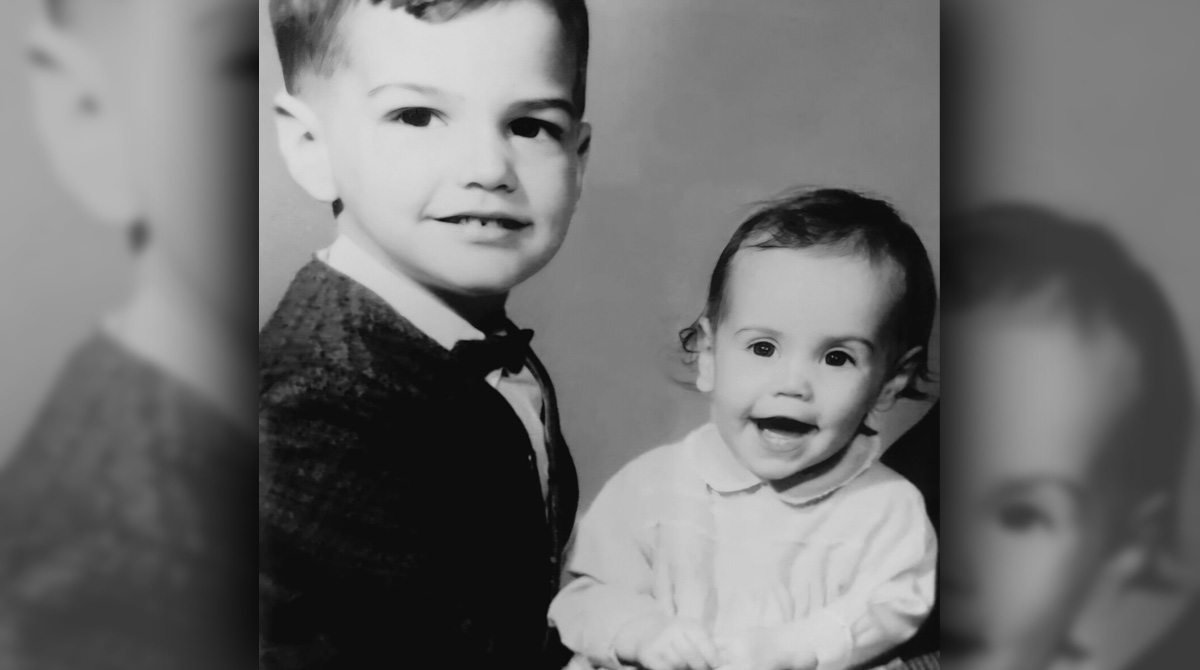
But that novel has always stayed with me. The twenty-plus stories I subsequently wrote were published, and eventually I collected and organized them to make my first book, the novel-in-stories called White Plains. And I went on to publish other stories, and two other books. But when I published my children’s book, The Magic Ticket, which is about my little sister’s death when I was a boy, I felt a tug. I needed to go back to that first novel, which was also about my sister, albeit more indirectly so.
Some twenty-five years later, it was time.
With some trepidation I found the file, opened it, and started reading. Not bad, I thought. But then, as I kept reading, I realized something:
It was kind of boring.
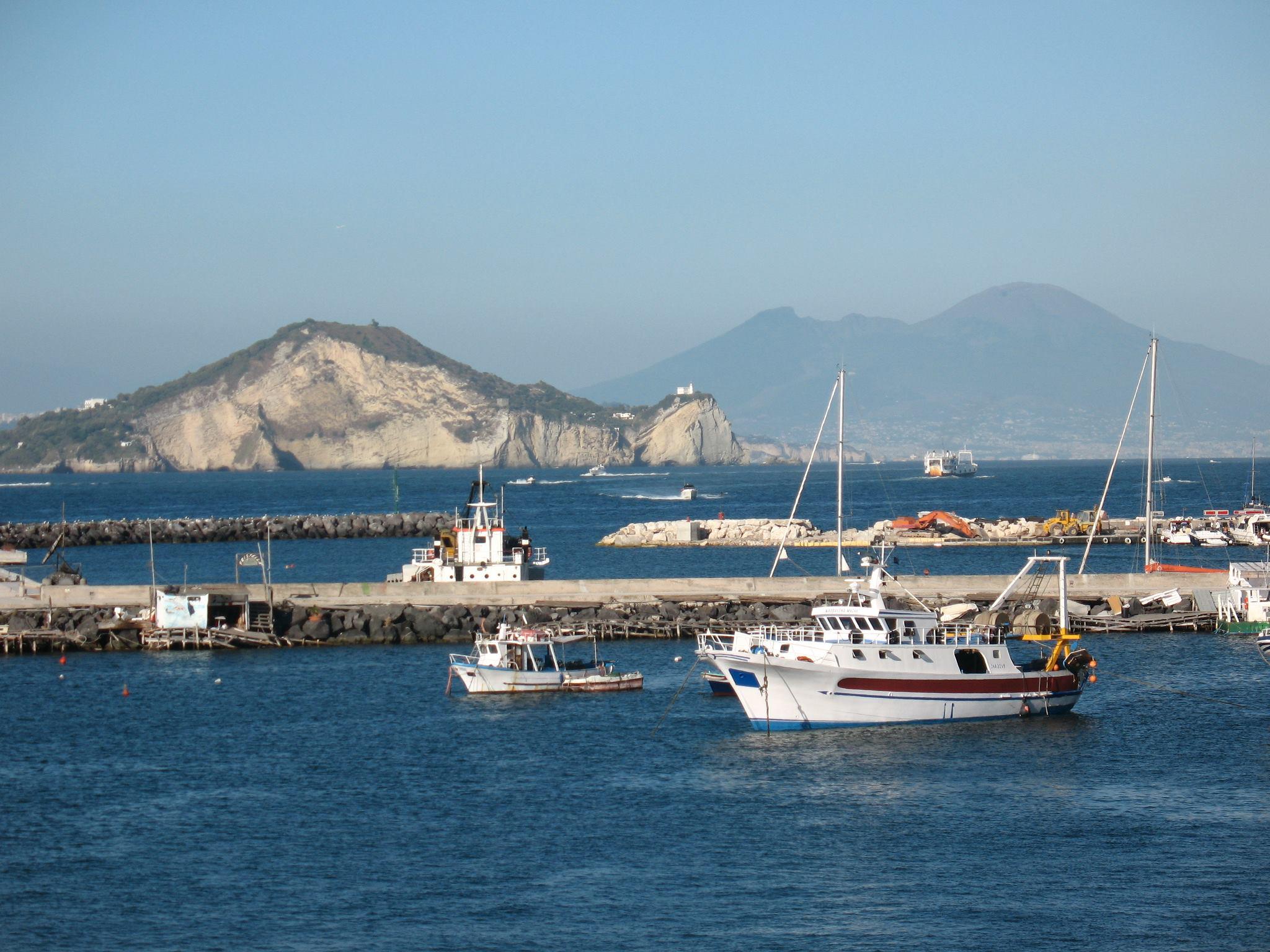
The story itself is fine: it takes place over three days in Italy and is based on an experience I had in my mother’s hometown (Pozzuoli, near Naples) one summer when I was sixteen or seventeen, when there was a tremor from a bradyseism (which, coincidentally, is hitting the region again, this year) and that experience, and the closeness I felt with my cousins there, somehow reconnected me with my little sister, who had died a decade earlier. It has everything you would look for in a novel about Italy: lush landscapes, passionate characters, family drama, an active volcano hulking in the distance–and it’s a classic coming-of-age tale. But still: a little boring.
The problem was not with the story but with the narrative voice. It was flat. I was flat. My narration, I mean. It was safe and eloquent and . . . meh.
I knew what I needed to do.
In the decades since writing that first novel, I had learned a lot about narrative voice. So I dove in, determined to rewrite it in a more dynamic, more intimate voice. I started by changing the point of view from third person (“Marcus”) to first (“I”). I narrated it as if I were speaking softly in your ear. When I showed it to my writing group, they asked if it was a true story. When I said yes, one of them suggested, “Well, why don’t you write it as a memoir?”
Because I’m a fiction writer, I almost said, but that wasn’t the real answer. The real answer was that I was afraid of writing a memoir. I was worried about my family being upset at how I depicted some people and events; I was afraid of hurting someone’s feelings or getting things wrong–it all happened so long ago, and my memory couldn’t be trusted. And that’s when my friend reminded me that memoirs aren’t written by people who remember everything–in fact, most memoirs are attempts to remember things, to make sense of what happened in the past, on the page, and are based on inexact memories at best. So I thought, Okay, I’ll do it. I’ll write a memoir.
But then, a quarter of the way through my rewrite, I stalled. I simply couldn’t figure out what was memory and what was what I’ll call myth–that is to say, stuff I thought I remembered but which maybe never happened, or events that had been described and shaped for me and felt (if this makes sense) truer than memory, a.k.a. myth. In writing the novel the first time, I had recorded events as memories and untruths as truth (remember, I was writing a novel, so I wasn’t worried about bending the truth or making things up), and then revised those memories/truths/untruths forty or fifty times, and after doing that, and after twenty-five years passed, I could no longer differentiate between fiction and nonfiction–or more to the point, I didn’t even want to differentiate. Now, I have some solid memories and some as-told-to-me stories that feel like memories, but for the most part I don’t know what are my real memories and what are the made-up scenes that have solidified in my brain as truth. And I don’t really want to know. I used to strenuously attempt to remember things as they actually happened back then; I even underwent hypnosis and trance work. But now, I’m more curious about the liminal space between memory and imagination, between facts and stories, between what I was told and what I experienced and what I remember.
So I came up with a solution: I would make that the main theme of this memoir-as-novel-book. What is memory? In other words, keep the story as is, but shift the focus onto the narrator.
I’m fascinated by the way trauma shuts off memories, the way yearning creates fantasy that becomes memory, the way images in our brain are sometimes snapshots of memories, sometimes memories turned into snapshots, sometimes snapshots that somehow locked in as memories. Is memory, then, solely what we actually remember, like a video taken at the time and later replayed, or is it something shaped by a story (either one we tell ourselves or one told to us) that evolves into what feels like truth, so vivid it’s as if it was a lived experience we remember? And why is it that we vividly remember odd, incidental moments decades after they happened, whereas other, more significant moments are completely, frustratingly lost in (brain)space?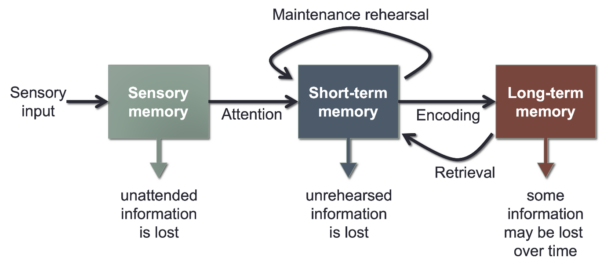
I mean, is memory really what we think it is?
To put it more specifically, did I feel the presence of my dead sister when I climbed down into a fissure during a tremor, the earth shuddering underneath me and above me? Or did I imagine her there? Did I even drop down into that fissure or did I just imagine doing so? And is my memory of doing so based on a story my cousin told the family about me, again and again until it became truth? Or was it something I invented twenty-five years ago, based on a a long-ago dream I had, filled with a long-ago yearning, a yearning so strong it created a memory of something that never happened? Or it did happen but it was such a powerful experience I blocked it out for a long time until I unearthed it by writing about it? Or some combination of all the above?
In writing about this now, I realize that’s what I was afraid of. That’s why I didn’t want to write a memoir. Because it would return me to that terrifying time in my life when I didn’t know what was real and what was unreal, what was human and what was spirit, what I was told and what I felt. When I didn’t know what had happened to my sister and I existed–for days, months, years–in a cloud of guilt and silence and knowing and unknowing, searching but not finding. And what, to a child, is more terrifying than not knowing? Than intuiting one thing and being told another? Than asking questions that nobody was capable of answering?
No wonder I didn’t want to enter the uncertain, misty realm of memoir. No wonder I was more comfortable fictionalizing my story. Structuring it. Providing answers and conveying a truth that made sense.
But now, I’m ready for that uncertainty. In fact, I feel certain that if I drop down into it, truth will be found in the midst of it.
So for a change, I’m going to allow these open-ended questions to drive my writing, instead of my writing driving towards an answer. I’m going to trust the unknown and let go of the need to resolve the unknown. I’m going to continue to ask questions rather than provide answers. And I’m not going to care if I’m writing a memoir or novel. I’m just going to tell my story, as truthfully and authentically and uncertainly as I can.
Wish me luck.